
- 2 views
Monetary tightening is often described rather simply: the central bank raises interest rates, borrowing becomes more expensive, demand slows and inflation eventually moderates. But from an investor’s perspective, a more interesting question arises: who actually absorbs the interest-rate hikes?
Is it the bank, through lower margins? The NBFC, through higher borrowing costs? The corporate, through higher interest expense? Or the household, through a larger EMI or longer loan tenure?
Transmission during tightening episodes: Historical context
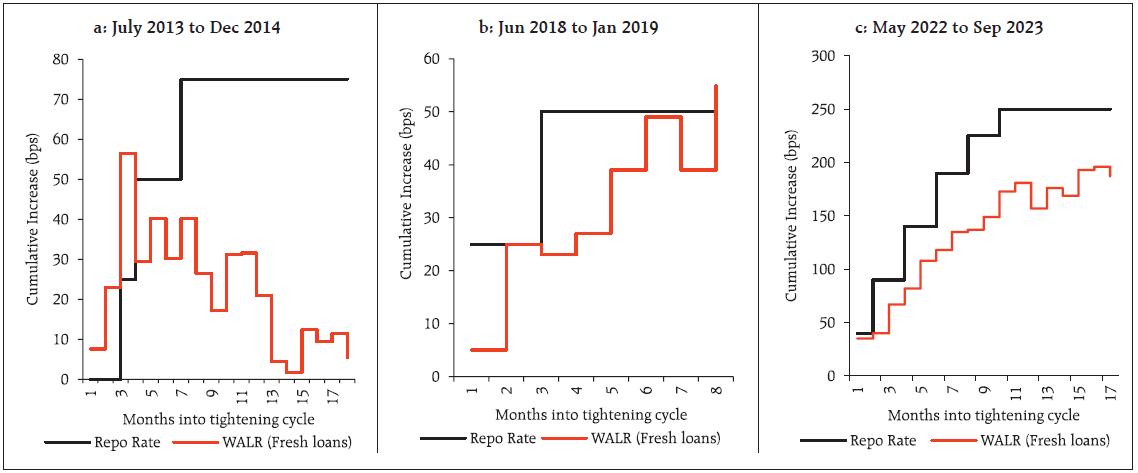
Over the past decade, transmission of RBI rate hikes into bank lending rates has become faster, larger and more predictable, reflecting the gradual shift from administered/internal benchmarks to the external benchmark-based lending rate (EBLR) regime. Earlier tightening episodes saw uneven pass-through. During the 2013–14 cycle, surplus liquidity and other episode-specific factors weakened transmission, while in the 2018–19 cycle, a 50 bps repo hike translated into about a 55 bps increase in fresh lending rates. By contrast, in the May 2022–February 2023 tightening cycle, a 250 bps increase in the repo rate led to a 173 bps rise in the weighted average lending rate on fresh rupee loans and a 95 bps rise on outstanding loans.
The key structural change has been the introduction of EBLR (External Benchmark Lending Rate) in October 2019, which links a growing share of floating-rate loans directly to benchmarks such as the repo rate, enabling quicker resets. According to the RBI Bulletin, November 2023, RBI’s empirical analysis estimates long-run pass-through to lending rates at 82% during the EBLR period, compared with 69% over the broader flexible-inflation-targeting period. In effect, monetary tightening now reaches borrowers more directly than a decade ago. However, transmission remains incomplete because a portion of the loan book is still linked to the Marginal Cost of Funds-based Lending Rate (MCLR) and other slower-reset benchmarks.
Chart 1 – Speed of Transmission in WALR on Fresh Loans across Tightening Cycles
Source: RBI Bulletin, November 2023. WALR – Weighted Average Lending Rate
Table 1 – Change in Repo and other Rates
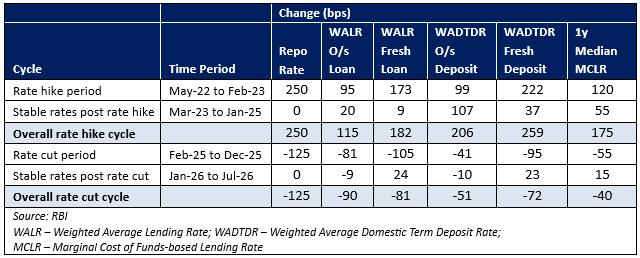
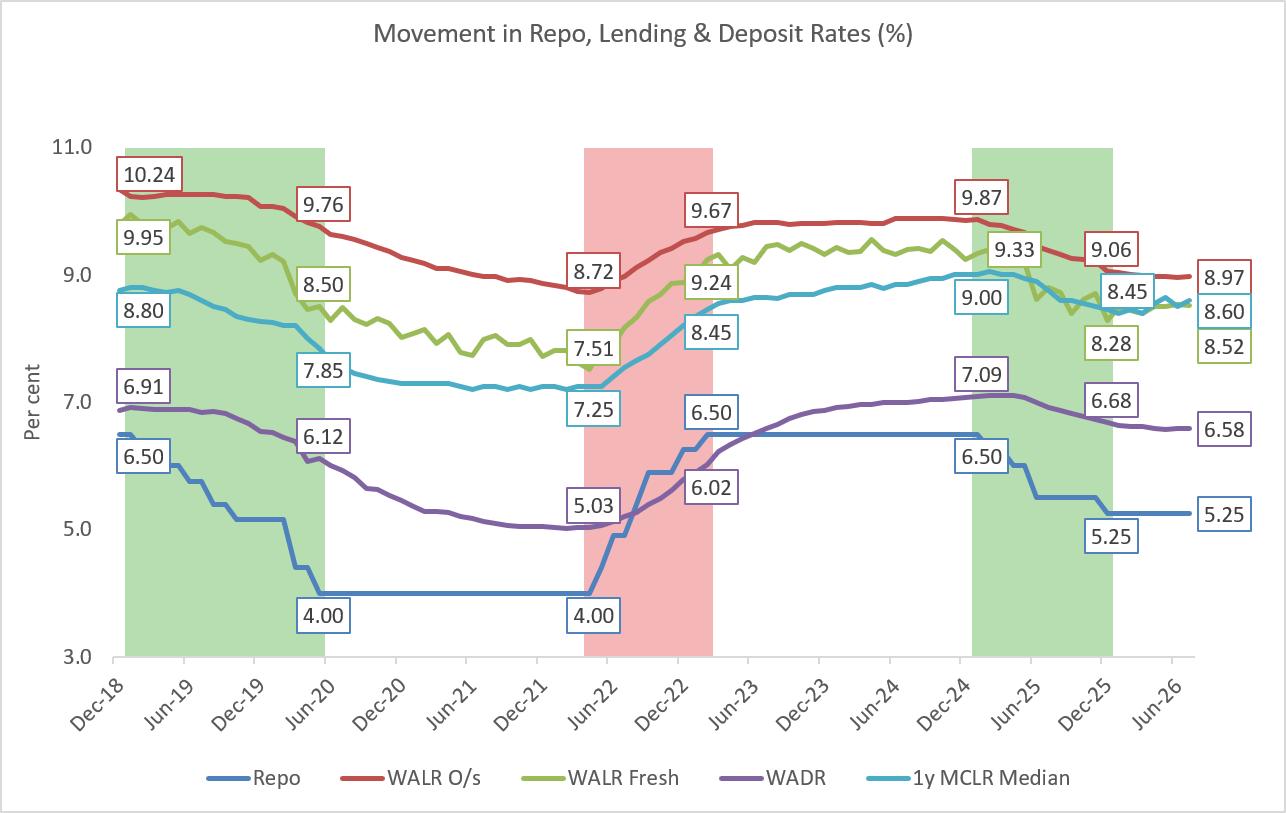
Chart 2 –Transmission of changes in Repo to other Rates in Banking System
Source: RBI
Banks: Beneficiaries first, Absorbers later
In the early phase of the previous tightening cycle, banks benefited from a favourable mismatch in the pace of asset and liability repricing. As the RBI raised the repo rate by 250 bps between May 2022 and February 2023, repo-linked benchmark rates moved up by the full 250 bps, while the one-year median MCLR increased by a relatively lower 120 bps. This translated into a 173 bps rise in the Weighted Average Lending Rate (WALR) on fresh rupee loans and a 95 bps increase on outstanding loans. This increase was aided by the growing share of externally benchmarked floating-rate loans, which repriced more quickly.
Deposit costs, however, adjusted with a lag. Fresh term deposit rates rose by 222 bps over the same period, but outstanding term deposit rates increased by only 99 bps as the existing deposit book repriced gradually. Savings deposit rates—accounting for ~34% of deposits—remained broadly unchanged, while current accounts (~10% of deposits) continued to carry no interest. This delayed pass-through on the liability side initially provided a meaningful cushion to bank margins.
That benefit was visible in reported spreads. Between H2FY2022 and H2FY2023, banks’ yield on assets rose by around 60 bps, while the cost of funds increased by only 30 bps, supporting a 30 bps expansion in Net Interest Margin (NIM). As the tightening cycle matured, however, liability-side transmission gathered pace. Between H2FY2023 and H2FY2024, yield on assets rose by a further 70 bps, while the cost of funds increased by 100 bps, resulting in around 10 bps of NIM compression. In effect, banks were initial beneficiaries of the rate-hike cycle but increasingly became absorbers of the shock as deposit repricing caught up with asset repricing.
Along with lending and deposit books, banks may also absorb part of the rate shock through their treasury books. Rising bond yields can generate mark-to-market losses on fixed-income investments, particularly for longer-duration portfolios, although the impact varies with portfolio duration and accounting classification. The revised RBI investment-accounting framework, effective April 2024, could, however, cushion the impact on reported profits relative to earlier cycles. Unrealised fair-value changes on Available for Sale (AFS) securities are now routed through the AFS reserve rather than the Income Statement, while Held to Maturity (HTM) securities continue to be carried at cost, subject to impairment.
What Determines the Pace of Repricing for Banks?
The impact of a tightening cycle is unlikely to be uniform across banks and will depend materially on the composition of both their asset and liability books.
Two factors are particularly important:
-
The share of EBLR-linked loans determines how quickly higher policy rates transmit to lending yields. Banks with a larger proportion of externally benchmarked loans should see faster repricing of their loan books. As the RBI noted in its November 2023 Bulletin, private sector banks have a higher share of externally benchmarked floating-rate loans than public sector banks. This likely contributed to the stronger pass-through to their outstanding lending rates.
-
The share of Current Account and Savings Account (CASA) deposits influences the pace of repricing on the liability side. Banks with a higher CASA share are generally better insulated from an immediate increase in funding costs, since current accounts are non-interest bearing and savings deposit rates tend to be repriced more cautiously than term deposits.
Taken together, these factors give banks with higher EBLR-linked assets and stronger CASA franchises an advantage in the early phase of a tightening cycle. They are likely to experience faster asset and slower liability repricing. This advantage can, however, narrow as deposit competition intensifies and term deposit costs catch up.
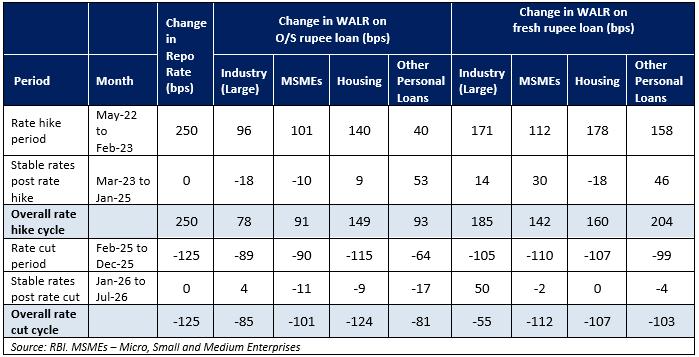
Table 2 – Transmission of Change in Repo to WALR on Different Segments
Households: Faster Transmission, Deferred Cash-flow Impact
For households, monetary transmission has become more direct, although its speed varies by product, competitive intensity and the benchmark used for pricing. Floating-rate housing loans illustrate this clearly: between May 2022 and February 2023, rates on fresh housing loans increased by around 178 bps, while rates on outstanding loans rose by about 140 bps. Repricing can be slower for fixed-rate or MCLR-linked retail loans, where the reset mechanism is less directly tied to the policy rate.
However, the immediate impact on household cash flows was less visible than the increase in lending rates would suggest. In many floating-rate home loans, higher rates were initially accommodated through longer loan tenors rather than higher Equated Monthly Instalments (EMIs), deferring part of the burden into the future. This became significant enough for the RBI to introduce a framework in 2023 requiring greater transparency and borrower choice when floating rates reset.
The implications are significant as household leverage has risen meaningfully over the past few years. The RBI estimates that household liabilities increased from 34.8% of GDP in March 2020 to 45.8% by March 2026. Borrower quality has so far remained relatively healthy, with a rising share of prime-and-above borrowers and benign housing-loan asset quality. However, the composition of debt warrants closer monitoring, as consumption-oriented borrowing accounted for nearly half of household debt by March 2026 and has grown faster than borrowing for asset creation.
Thus, households are becoming a more direct absorber of monetary tightening, even though the timing and intensity of the impact vary significantly across borrowers and products.
Corporates: Stronger Balance Sheets Soften the Rate Shock
Perhaps the biggest difference between the last tightening cycle and earlier episodes lies in the starting position of corporate balance sheets. Indian corporates entered the 2022 cycle after several years of deleveraging, leaving them better placed to absorb higher borrowing costs and refinancing pressures.
RBI data underline this resilience. Between May 2022 and February 2023, weighted average rates on fresh loans to large industry increased by 171 bps, indicating meaningful transmission of policy tightening to corporate borrowers. Yet widespread corporate distress did not follow. This highlights an important distinction: effective monetary transmission need not result in defaults when borrower balance sheets enter the cycle in good health.
RBI data also suggest that corporate financial metrics have remained supportive. The aggregate interest coverage ratio rose to 6.5x in Q4FY2026, supported by stronger growth in gross profits relative to interest expenses, while the debt-service ratio remained below its long-term average. An ICRA study covering around 1,600 non-financial corporates reinforces this trend, with debt-to-operating profit declining from 3.4x in FY2016 to 2.3x in FY2022 and further to 2.1x in FY2025.
In other words, stronger starting balance sheets have increased Corporate India’s capacity to absorb higher rates. The key credit risk has therefore shifted from broad-based leverage stress to more issuer-specific refinancing and cash-flow vulnerabilities.
NBFCs: Caught between Lenders and Borrowers
NBFCs sit at a unique point in the monetary transmission chain because they are borrowers as well as lenders. Unlike banks, they do not benefit from a large pool of low-cost current and savings deposits. Their liabilities are largely made up of bank borrowings, bonds, commercial paper, securitisation and other market-linked funding sources. As policy rates rise, funding costs therefore tend to increase as liabilities mature and are refinanced.
The extent to which this pressure is absorbed by NBFCs depends on the composition of their asset book. Institutions with shorter-duration loans, floating-rate products or stronger pricing power can reprice borrowers relatively quickly. Those with longer-duration or fixed-rate assets face a greater risk of spread compression as liabilities reprice faster than assets. Since NBFC loan pricing is broadly deregulated, higher funding costs can ultimately be passed on to borrowers. However, the speed and extent of transmission vary significantly across products.
This creates very different outcomes across business models. A gold financier with short-tenor loans can reprice their book relatively quickly, while a housing financier with long-duration fixed-rate assets faces a much more challenging asset-liability equation.
Importantly, NBFCs will enter the next tightening cycle from a stronger position than in the previous tightening cycle. Higher capital buffers, better asset quality and stronger profitability improve their capacity to absorb funding-cost pressures. The post-IL&FS regulatory focus on liquidity and Asset Liability Management (ALM) has also reduced some of the vulnerabilities that amplified stress in 2018–19.
As a result, while rising rates remain a margin challenge for parts of the sector, NBFCs enter the current environment from a materially stronger starting point.
The Next Cycle: Smaller Shock, Faster Transmission
Earlier tightening cycles in India often coincided with underlying balance-sheet stress. The post-global-financial-crisis investment boom left parts of corporate India highly leveraged, with banks exposed to stressed sectors such as infrastructure, steel, power and construction. By contrast, the 2022 tightening cycle began from a much stronger starting point, with healthier bank balance sheets, lower corporate leverage and significantly repaired NBFC finances.
For investors, the key lesson is that the impact of monetary tightening depends not only on the magnitude of the repo-rate increase, but also on repricing speed, asset-liability duration, pricing power and starting balance-sheet strength. The 2022–23 experience showed that even a 250 bps tightening could be absorbed without translating into systemic stress when the underlying financial system was resilient.
The next cycle may play out differently in three important ways:
-
First, the next cycle may be shallower, with market expectations currently centred on a relatively modest tightening path.
-
Second, transmission to lending rates could be faster, given that the share of EBLR-linked loans has risen from 44% in March 2022 to 68% in March 2026.
-
Third, transmission to deposit rates could initially be slower. High system liquidity, supported by strong Foreign Currency Non-Resident (FCNR) deposit inflows, may reduce the urgency for banks to aggressively reprice term deposits.
This combination could have important implications for different borrowers and lenders. Households, in particular, may emerge as one of the more rate-sensitive segments in the next tightening cycle, as higher leverage and faster loan repricing increase the direct impact of rate hikes on household cash flows.
The next tightening cycle, therefore, may be smaller in magnitude but faster in transmission. The key question will not simply be how much the RBI raises rates, but where the resulting interest-rate shock ultimately settles. For investors, identifying who can reprice, who can absorb and who is most exposed to duration and funding mismatches will matter far more than the headline repo-rate move itself.
The views expressed are the author’s own views and not necessarily those of UTI Asset Management Company Limited. The views are not investment advice and investors should obtain their own independent advice before taking a decision to invest in any asset class or instrument.
Mutual Fund investments are subject to market risks, read all scheme related documents carefully.
