- 3 views
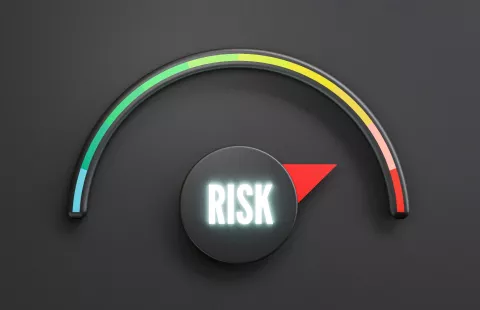
In India, mutual fund schemes operate within SEBI’s regulatory framework, which requires asset management companies to display a Riskometer so investors can see a scheme’s risk level before investing.
A common beginner query is what are high risk mutual funds in practical terms, especially because one scheme can behave very differently from another.
For retail investors, the topic matters because higher return potential may often come with higher volatility in portfolio value. Understanding the category, the source of risk, and the suitable time horizon can help investors judge whether such funds fit their overall financial plan.
What are high-risk mutual funds
In practice, high-risk mutual funds are not a separate statutory bucket under SEBI’s scheme classification. The term is commonly used for schemes that sit toward the upper end of SEBI’s Riskometer, especially “High” or “Very High”, and for portfolios where equity exposure, smaller companies, or concentration in a sector, theme, or limited set of stocks can increase volatility.
Among regulated high risk investment funds available to retail investors, mutual funds are relatively transparent because investors can review the Riskometer, scheme documents, and portfolio disclosures. Still, higher disclosure does not reduce market risk; it only makes it easier to understand.
Features
High-risk funds usually have a few common features:
-
Higher volatility:Equity schemes seek long-term growth, but they can be volatile in the short term, particularly where exposure is concentrated or tilted toward smaller companies.
-
Concentration risk: Sectoral, thematic and focused funds depend on a narrower opportunity set than diversified funds, which can magnify potential gains as well as losses.
-
Longer holding period: Equity funds come with a higher risk appetite and are suitable for investors with a longer investment horizon.
Types
Common types that often fall into the higher-risk end of the mutual fund spectrum include:
-
Small cap funds:These invest at least 65% of assets in small cap companies. Such funds can be volatile and risky because the underlying businesses are still at an early growth stage and more reactive to external factors.
-
Mid-cap funds:These invest in mid-sized companies with stronger growth potential than large caps, but with more risk than large cap funds. Mid cap and small cap funds can be highly volatile in the short to medium term.
-
Sectoral funds:These invest at least 80% in one sector, such as banking, technology or healthcare. Because diversification is limited, outcomes can depend heavily on that sector’s cycle.
-
Thematic funds:These invest around a theme, such as infrastructure or clean energy, across related sectors. They are broader than sectoral funds, yet still highlights concentration risk, volatility and even liquidity risk in some cases.
-
Focused funds: These can typically hold maximum 30 stocks, so stock-selection risk becomes more meaningful than in a broader multi-cap portfolio.
Advantages
There may be potential for significant capital appreciation over long periods if the chosen market segment performs well. This is why these schemes are often described as high risk and high return mutual funds, but the “high return” part remains a possibility, not an assurance.
High-risk schemes can also provide targeted exposure to emerging businesses, structural themes or cyclical sectors that broader diversified funds may not emphasise. For investors who understand that trade-off, such exposure can diversify ideas within an equity allocation, even if it does not reduce portfolio risk overall.
Risks involved
The first major risk is concentration risk, which means too much dependence on a single sector, theme or a limited set of stocks. If that narrow segment underperforms, the declines in NAV, especially over the short term, can be sharper than in diversified funds.
The second is market and liquidity risk, especially in funds that invest in smaller companies or narrow themes. Such funds may underperform when the theme does not play out as expected and may also present liquidity challenges to investors.
Things to know before investing in high-risk funds
A few checks can make the decision more informed:
-
Review the Riskometer, scheme objective, sector allocation and concentration before investing. SEBI introduced the Riskometer precisely to help investors match a scheme’s risk with their own risk appetite.
-
Match the fund to a long-term goal. Equity schemes are more aligned to higher risk appetite and longer horizons, not short-term cash needs.
-
An SIP investment can stagger entry into volatile categories because SIPs are periodic fixed investing that promotes discipline and rupee cost averaging.
-
An SIP calculator can help estimate future value; however it is important to note such figures are only illustrative projections based on an assumed rate of return and not actual returns.
Who may consider investing
These schemes may be considered by investors with higher risk tolerance, the ability to stay invested through sharp corrections, and a goal that is several years away. Equity funds are more aligned to longer horizons, and mid cap and small cap funds may be considered for long-term goals with a five-to-seven-year horizon.
In that sense, high risk mutual funds for long term may fit a limited part of a portfolio for investors who understand volatility. High risk funds re generally less suitable for investors seeking capital stability or predictable short-term outcomes.
Conclusion
High-risk mutual funds can offer long-term growth potential, but they can also experience deeper drawdowns, longer underperformance phases and sharper day-to-day volatility. For Indian retail investors, the key is not only return potential, but also whether the Riskometer, concentration level and time horizon fit the purpose of the investment.
FAQs
Are high-risk mutual funds suitable for beginners?
They may be considered as a limited allocation after the investor understands the Riskometer and the source of volatility. Concentrated funds are riskier than broader diversified funds.
Can SIP reduce risk in these funds?
SIP can reduce timing risk by spreading purchases over time and can improve investing discipline. However, SIP does not remove market risk or guarantee smoother returns.
How can an investor identify a high-risk mutual fund?
The simplest starting point is the scheme’s Riskometer. After that, the investor can review whether the fund is small cap, mid cap, sectoral, thematic or focused in nature.
Are sectoral and thematic funds riskier than diversified equity funds?
Generally, yes. Sectoral and thematic funds carry higher risk because diversification is narrower and outcomes depend more on a specific market segment.
Mutual Fund investments are subject to market risks, read all scheme related documents carefully.