
- 10 views
Key Takeaways
Policy continuity: The RBI held the repo rate at 5.25% and retained its “Neutral” stance, reinforcing the December policy framework.
Strong growth confidence: The RBI’s macro assessment continues to underscore the resilience of domestic growth despite global uncertainty. The H1FY27 growth forecast has been revised upwards by 20bps to 7%.
Inflation comfort supports patience: Inflation is assessed as manageable and well within the target band, allowing the RBI to remain patient and keep policy growth-supportive.
Liquidity remains the active policy lever: The RBI is using liquidity operations and regulatory calibration to keep financial conditions “accommodative” and policy transmission effective.
Implementation focus on credit growth: Recent measures indicate a clear intent to support productive credit demand and market functioning.
Policy outlook: We continue to expect the RBI to maintain an extended pause. The growth outlook remains supportive from the cyclical policy support and structural reforms, while inflation is expected to stay close to the RBI’s 4% target.
Portfolio implication: Accrual-led portfolio construction remains appropriate. The one-three-year segment offers the most attractive risk-reward, while duration can be added opportunistically during periods of yield back-ups.
Policy Action
-
The Monetary Policy Committee (MPC) voted unanimously to keep the policy repo rate unchanged at 5.25%.
-
Consequently, the Standing Deposit Facility (SDF) rate remains at 5%, while the Marginal Standing Facility (MSF) rate remains at 5.50%.
-
The MPC also retained the “Neutral” stance in a 5-1 vote. Committee member Prof. Ram Singh maintained his view of changing the stance to “Accommodative” from “Neutral”.
Assessment of Policy Action
As widely expected, the RBI maintained a status quo on rates and retained the “Neutral” stance. It showed greater confidence in the overall macroeconomic outlook, with expectations of strong growth, low inflation and manageable external accounts, despite heightened geopolitical tensions and elevated uncertainties in the global economy.
Both growth and inflation forecasts for FY26 and the first two quarters of FY27 were revised higher.
On the external front, the RBI noted the government’s efforts in pursuing bilateral and regional trade agreements with major trading partners, which it expects will boost international trade and investment and support the economic outlook.
Below are key RBI estimates on the growth/inflation trajectory into the next year compared to their previous forecasts:
|
|
CPI Inflation (%) |
GDP Growth (%) |
||||
|
1-Oct-25 |
5-Dec-25 |
6-Feb-25 |
1-Oct-25 |
5-Dec-25 |
6-Feb-25 |
|
|
Q3FY26 |
1.8 |
0.6 |
|
6.4 |
7.0 |
|
|
Q4FY26 |
4.0 |
2.9 |
3.2 |
6.2 |
6.5 |
|
|
FY26 |
2.6 |
2.0 |
2.1 |
6.8 |
7.3 |
7.4 |
|
Q1FY2027 |
4.5 |
3.9 |
4.0 |
6.4 |
6.7 |
6.9 |
|
Q2FY2027 |
|
4.0 |
4.2 |
|
6.8 |
7.0 |
Source: RBI
Assessment of Inflation
On inflation, the policy communication continues to project comfort relative to recent trends, with the central bank indicating that underlying pressures remain manageable. Inflation remains below the tolerance band and the outlook continues to be benign.
The slight upward revision in the inflation outlook is primarily due to an increase in prices of precious metals, which are estimated to contribute around 60-70 basis points. The underlying inflation continues to be low.
Assessment of Growth
RBI expects growth in 2026–27 to remain resilient, with agriculture supported by healthy reservoir levels, robust rabi sowing and better crop conditions. Manufacturing is expected to strengthen on the back of improved corporate performance and continued momentum in the informal sector, while construction activity is likely to stay firm. Services are projected to remain robust, led by improving domestic demand conditions.
Growth estimates for Q1FY27 & Q2FY27 were revised upwards by 20 bps each, reflecting trade pacts concluded with major economies, which are expected to boost exports over the medium term.
The central bank deferred providing full-year inflation and growth forecasts pending the release of new CPI and GDP series later this month, noting that full-year projections will be presented in its April policy.
Liquidity Management: The Real Policy Transmission Channel
Over the last year and especially post-December, the RBI has increasingly relied on liquidity operations and operational tools to ensure that policy intent is transmitted effectively into money markets, bank funding conditions and credit intermediation. RBI has undertaken an unprecedented Rs. 4 trillion OMO purchases since the December policy, along with a $25 billion FX swap. As a result, the RBI’s balance sheet has now increased to 24.3% of GDP from 22.8% in FY25 (Source: IDFC Bank Research). Core liquidity surplus is tracking at INR5.1tn as of January-end 2026 and could rise to INR6tn in the first week of February.
The RBI Governor mentioned that the recent spike in money market rates was driven by excess supply due to the bunching of CP and CD redemptions in January, along with year-end seasonal factors. We expect money market rates to stabilise in Q1FY27 as government spending improves and issuance moderates. The Governor also gave a comforting forward guidance, reiterating that the RBI will continue to be pre-emptive to ensure adequate liquidity.
Regulatory Measures
Alongside this, the regulatory direction appears aligned with credit deepening and market efficiency, with measures aimed at improving credit delivery, safeguarding system behaviour and broadening market functionality.
The following regulatory announcements were made today to enhance the flow of credit and promote ease of doing business for financial institutions:
-
Banks to directly lend to REITs with prudential safeguards.
-
Removal of the prior RBI approval requirement for opening branches by Gold Loan NBFCs with more than 1,000 branches.
-
Enhancement of the limit of collateral-free loans to Micro and Small Enterprises from Rs. 10 lakh to Rs. 20 lakh.
-
Easing of compliance requirements for smaller NBFCs with asset size not exceeding Rs. 1,000 crore and not availing public funds.
In effect, the RBI’s operating template can be summarised as keeping monetary conditions supportive while
improving credit plumbing through targeted regulatory calibration.
Market Outlook
Reinforcing a “lower for longer bias”
The policy mix of robust growth, stable inflation comfort and accommodative liquidity conditions supports a largely range-bound yield environment, with intermittent volatility. We believe the extended monetary pause creates a favourable backdrop for accrual-led portfolios.
Accordingly, we remain constructive for high-quality, accrual-based strategies in the one-three-year duration, with some flexibility to exploit curve dislocations as they emerge on the longer end.
Suggested asset allocation framework by time horizon
-
3–12 months: Investors may consider Money Market Funds or Low Duration Funds, which are suitable for managing short-term surplus while maintaining liquidity.
-
12-24 months: Investors may consider Short Duration Funds and Corporate Bond Funds, which are well- positioned to benefit from a benign macro backdrop and a liquidity-rich environment.
-
More than 24 months: Investors may consider Income plus Arbitrage strategies for tax-efficient return generation.
The views expressed are author’s own views and not necessarily those of UTI Asset Management Company Limited. The views are not an investment advice and investors should obtain their own independent advice before taking a decision to invest in any asset class or instruments.
Mutual Fund Investments are subject to market risks, read all scheme related documents carefully.

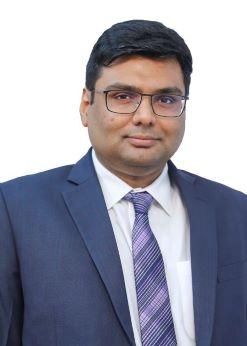
Anurag Mittal is the Head - Fixed Income at UTI Asset Management Company Ltd. He is a Chartered Accountant affiliated with Institute of Chartered Accountant of India and holds a degree in Master of Science from University of London. He previously held the office of Senior Fund Manager at IDFC Asset Management Company Private Limited and managed key IDFC debt mutual fund schemes. Prior to this, he was associated with HDFC Asset Management Company Limited as Senior Manager - Investments and Axis Asset Management Company Limited as Fund Manager - Investments, responsible for Fund Management, Dealing and Research.